





Complete guide
How much does a deck cost to build?
A new raised wood or composite deck typically runs $25–$60 per square foot in the U.S. — meaning a standard 16×20 (320 sq ft) deck lands between $8,000 and $19,200 depending on material and complexity. This guide covers the four main decking materials with honest tradeoffs on lifespan and maintenance, what's actually in a deck quote, and the structural details that separate a safe deck from a code violation.
Decking material options compared
- Pressure-treated pine ($15–$25/sq ft installed). Cheapest. 15–25 year lifespan. Needs staining/sealing every 2–3 years. Splinters and warps over time.
- Cedar or redwood ($22–$40/sq ft). Naturally rot-resistant, beautiful wood grain. 20–30 year lifespan. Needs annual finishing. Soft — dents and scratches easily.
- Composite (Trex, TimberTech) ($30–$55/sq ft). Wood fiber + plastic. No staining ever, splinter-free, 25-yr+ warranties. Hot underfoot in direct sun. Can scratch.
- PVC / cellular plastic ($35–$60/sq ft). All-synthetic. 30–50 year lifespan. Lowest maintenance. Highest cost. Can look "plastic" — choose grain-embossed boards.
Our deck material comparison page has full spec sheets including expansion behavior, heat retention, and fade resistance for each option.
What's in a deck installation quote?
- Permit and design — almost every deck over 30" off the ground needs a permit. Costs $100–$500 depending on jurisdiction.
- Footings — concrete piers below the frost line. 4–8 footings for a typical deck.
- Posts and beams — usually 6×6 posts; spans determined by code and load.
- Joists and ledger — 2×8 to 2×12 joists at 12" or 16" on center. The ledger board attaches the deck to the house — this is where most deck failures happen.
- Decking surface — the boards you walk on (pressure-treated, composite, etc.).
- Railings and stairs — required by code for any deck over 30" high. Add $30–$80 per linear foot of railing.
- Hardware — joist hangers, lag bolts, structural fasteners. The unglamorous stuff that holds everything up.
- Inspection — final inspection before use. Required by permit.
The deck construction process
A typical 320 sq ft deck takes 4–8 days:
- Day 1 — Permits, layout, and dig. Footing holes marked and dug below frost line.
- Day 2 — Footings pour. Concrete poured into footing holes, post bases set. 24-hour cure.
- Day 3 — Frame. Posts cut, beams installed, joists hung, ledger lag-bolted to house.
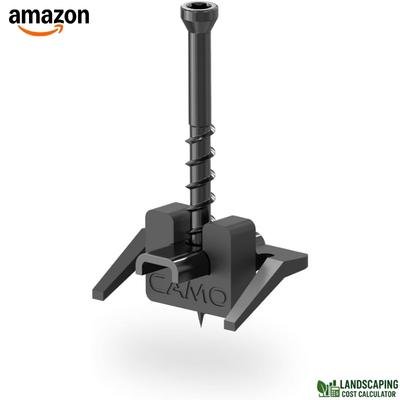
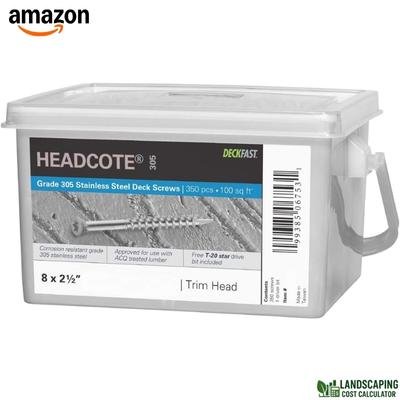
- Days 4–5 — Decking. Boards laid, cut, and fastened. Hidden fasteners for premium composite; visible screws for pressure-treated.
- Day 6 — Railings and stairs.
- Day 7 — Inspection and finish. Sand any rough spots, apply finish if wood, final cleanup.
What changes deck cost the most?
- Height off the ground. A 6" deck is essentially a patio with boards on top. A 12-foot-high deck needs taller posts, lateral bracing, stronger footings, and a stair system. Each foot of height adds cost.
- Shape. Rectangular decks are cheapest. Octagons, multi-level decks, and curved edges add 15–30% in labor.
- Railing material. Pressure-treated wood balusters are the cheapest ($30/linear ft). Aluminum or composite balusters are $50–$80. Glass or cable rail is $80–$150+.
- Stairs. A single set of stairs adds $800–$2,500 depending on height and width.
- Hidden fasteners. Composite decks usually use hidden fasteners ($1.50–$3 per sq ft extra) for the clean no-screw look.
- Skirting. Lattice or solid skirting around the base is optional but tidy. $10–$25 per linear ft.
Deck mistakes that cause real problems
- Ledger board attachment failure. The ledger connects the deck to the house. If it's nailed instead of bolted, or not flashed against water, it'll fail. This is the #1 cause of deck collapse.
- Skipping the permit. Even if the city doesn't catch you, an unpermitted deck creates issues when you sell the house, and your homeowner's insurance may not cover it.
- Wrong joist spacing for the material. Composite decks usually need 12" joist spacing (vs. 16" for wood). Cheap quotes that use 16" spacing for composite will cause sagging boards.
- Picture-frame edging on pressure-treated. Looks nice but traps moisture. Better on composite where it's just aesthetic.
- No ventilation under the deck. Decks need airflow under them or the joists rot. Skirting must include vents.
Deck cost FAQs
How much does a wood deck cost per square foot?
Pressure-treated pine runs $15–$25 per sq ft installed. Cedar or redwood runs $22–$40. Both include framing, surface boards, basic railings, and a single set of stairs.
Is composite decking worth the extra cost?
For most homeowners staying 10+ years, yes — composite costs 30–60% more upfront but eliminates staining and resealing. Total cost of ownership over 25 years is usually lower than pressure-treated wood.
How long does a deck last?
Pressure-treated wood 15–25 years (with regular sealing). Cedar/redwood 20–30. Composite 25–30. PVC 30–50. Lifespan depends heavily on whether you keep up with finishing (for wood) and avoid water entrapment (for all materials).
Do I need a permit for a deck?
Almost always, yes — especially for decks attached to the house or over 30" high. Free-standing low decks under a certain size (often 200 sq ft, 30" high) sometimes don't, but check locally before starting.
Can I DIY a deck?
Smaller (under 200 sq ft), ground-level decks are reasonable DIY projects for skilled homeowners. Anything attached to the house, over 30" high, or with stairs really benefits from professionals — the ledger attachment alone is structurally critical.